
ICD is the Publishing arm of the Institute for Creative Development. Up to this point it has primarily represented the works of Charles Johnston (directly publishing the shorter, more educational resource works and supporting visibility of books published through the traditional book trade). In the future, we hope to publish and support a growing number of works that we feel make major contribution to a culturally mature future. Single books are best purchased through book stores or Amazon.com at Charles Johnston’s author page. It you wish to purchase multiple books–either multiple copies of the same book for classroom us or several different books for personal use–contact Lyn Dillman at ICD Press (ICDPressld@gmail.com) for information about special bulk purchase rates. The more recent books are available on all ebook platforms.
Current ICD Press Publications
 The Creative Imperative: Human Growth and Planetary Evolution. (Published by Ten Speed Press/Celestial Arts in 1984—407pages.) The Creative Imperative first introduced the concepts of Cultural Maturity and the ideas of Creative Systems Theory and is still the place to go to find the most detailed presentation of many of the theories core concepts. It brings particular nuance to the theory’s developmental notions, how we can see parallel dynamics in the way human systems of all sorts—individuals, relationships, organizations, and cultural systems—grow and change. For many people it remains the definitive source (author page).
 Necessary Wisdom: Meeting the Challenge of a New Cultural Maturity. (Published by Ten Speed Press/Celestial Arts in 1991—255pages.) Necessary Wisdom is intended for a more general audience. It approaches the concept of Cultural Maturity by looking deeply at the either/ors that in times past have fractured understanding—polarities like “us” versus “them,” mind versus body, political Left versus political Right, masculine and feminine. It examines both why thinking in either/or terms has historically served us and why in the future it cannot. It also examines how thinking in more complete and systemic ways is something of which we are becoming capable and the implications for the choices we make in spheres as diverse as global relations, medicine, education, and love. (author page).
 Pattern and Reality: A Brief Introduction to Creative Systems Theory. (An educational resource published by ICD Press in 2002—68 pages.) Pattern and Reality provides an outline of Creative System’s Theory’s core concepts. It was developed as a teaching resource for classes at the Institute for Creative Development. It is appropriate both for people new to the theory and for people interested in a concise overview. It has been used as a text in classes in psychology, education, dance, leadership. systems thinking, philosophy and systems thinking more generally. Besides offering introductory perspective, it includes a number of early articles that applying the theory the current social issues such as the changing face of love, the effects of modern media, and the need to address human limits. (author page).
 The Power of Diversity: A Brief Introduction to the Creative Systems Personality Typology. (An educational resource published by ICD Press in 2002—65 pages.) The Power of Diversity provides an overview of the theory’s framework for understanding human difference. People who have had contact with the typology generally agree that it presents the most sophisticated and nuanced perspective for understanding personality and learning style diversity currently available. It also provides important insight into the powerfully creative outcomes that can result when we respect temperament differences and learn to engage in more consciously collaborative ways. This brief book was developed a learning resource at the Institute. It has been used as a text for classes on leadership, education, psychology, and systemic thinking. (author page).
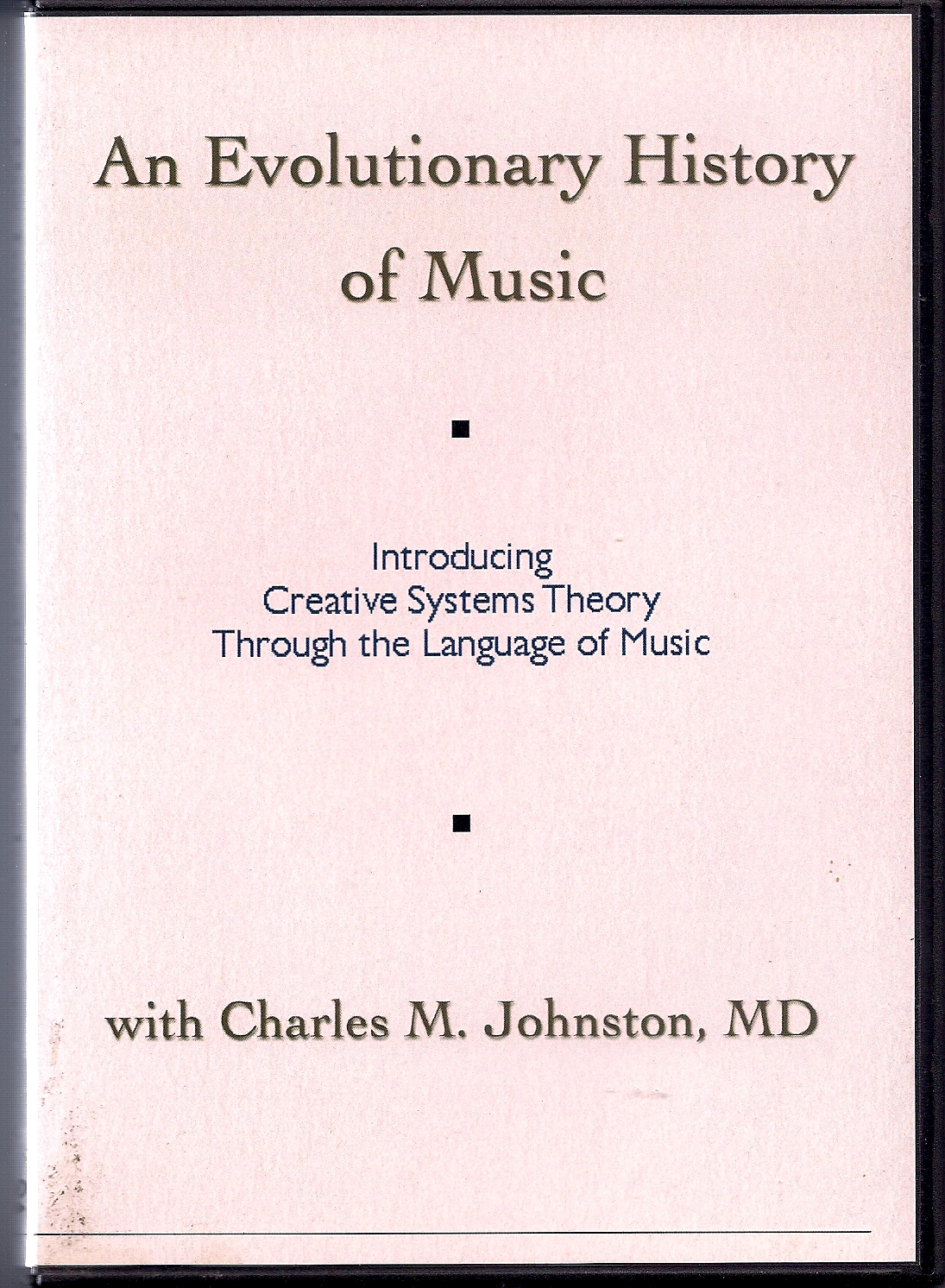 An Evolutionary History of Music. Charles Johnston periodically does a presentation he calls An Evolutionary History of Music. Over the course of a day, he draws on his background in world music to teach about how culture has evolved and to speculate about changes ahead. He plays music from each of culture’s creative stages and through story, description, and dance, engages people in the sensibilities of each stage. An edited version can be found at WWW.Creativesystems.org DVD’s can be purchased through the Institute. (Contact ICDPressinfo@gmail.com)
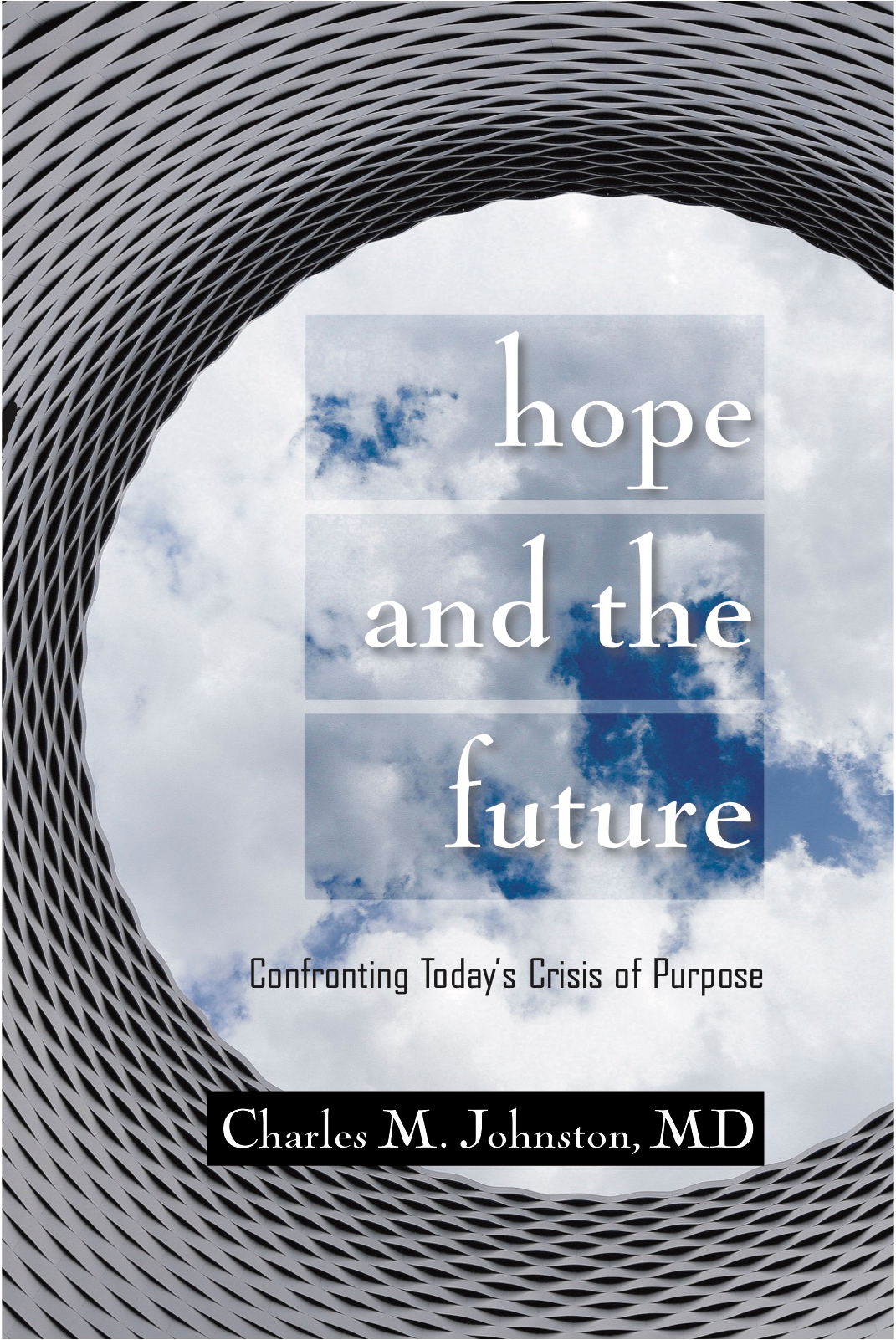 Hope and the Future: Confronting Today’s Crisis of Purpose (160 pages) Hope and the Future presents a brief but provocative examination of what legitimate hope for the future necessarilly depends on. It introduces the concept of Cultural Maturity by examining critical questions and challenges today confronting us as a species. It describes how effectively addressing many of these new questions and challenges will require new human skills and capacities—new ways of thinking, relating, and acting. And it argues that something like the changes the concept of Cultural Maturity describes is necessary if we are to realize these needed new human capacities. Some of the questions and challenges the book touches on include: How, given the growing availability of weapons of mass destruction, do we best support a safe human future? How will we make love work in the future, with gender roles and expectations today so in flux? How do we successfully address the very real possibility of environmental catastrophe? How will we make the moral decisions demanded of us—given both their growing complexity and the weakening of cultural guideposts that we have relied on in times past? And wow, in times ahead, will we deal with numerous new concerns that require global decision-making—such as terrorism and the need for stable and trustable global economic structures? See book page.
 Cultural Maturity—A Guidebook for the Future (With an Introduction to the Ideas of Creative Systems Theory) (To be released in early 2015—640 pages.) Cultural Maturity—A Guidebook for the Future is intended for people interested in understanding and developing the increasingly sophisticated leadership capacities that will more and more be needed in times ahead. It presents the concept of Cultural Maturity and introduces the Creative Systems Theory notions that underlie its conclusion. The book provides an in-depth look at how the future will require not just fresh ideas, but an essential ‘growing up’ as a species. It closely examines this needed next step in our collective development, what it asks of us and what it makes possible. It also examines how these changes are already beginning to happen, in subtle ways altering every part of our human landscape. The book’s core idea, the concept of Cultural Maturity, provides both big-picture perspective for understanding the times we live in and concrete tools for addressing the immense challenges that lie before us. If the concept of Cultural Maturity is correct, it describes changes that are as or more significant than those that brought us modern democratic governance 250 years ago. If it is not correct, it is hard to imagine a healthy and vital human future.
Quick and Dirty Answers to the Biggest of Questions: Creative Systems Theory Explains What It is All About (Really)
This short book claims to answer many of today’s—and existence’s—most ultimate questions. Among them: How do we best understand the times in which we live? How do we best understand the human story as a whole? Why, at different times, has human understanding taken that forms that it has? Are the beliefs of science and religion just different or parts of a larger picture? How do we best understand the experience of free will. What is our place in the larger scheme of things?The book looks at how such ultimate questions have tended to baffle us not because they are inherently difficult, but becase they require a maturity of perspective of which we are only now becoming capable. These questions share that they are systemic, and systemic in a particular sense. Quick and Dirty Answers describes how needed answers are in fact quite straightforward, rather common sense. What is different is that this is a sort of common sense that we are only beginning to be able to get our minds around. (See book page.)
The previous three books are a series that cover related material but for different audiences. Each has a similar ultimate intent: to help us better understand the time in which we live and what the future we require of us. The first book in this series, Hope and the Future: An Introduction to the concept of Cultural Maturity briefly describes how our times presents challenges that require new human skills and capacities if we are to successfully address them. It is intended for a general audience curious about the challenges humanity now faces. Cultural Maturity: A Guidebook for the Future (With an Introduction to the Ideas of Creative Systems Theory) presents a more detailed examination of needed new skills and capacities along with an in-depth look at the new, more mature kinds of understanding needed to put them into practice. It also introduces how the ideas of Creative Systems Theory provide a nuanced set of tools for making critical decisions. It is a lengthier work intended for those interested in making sense of and applying the new kind of leadership the future will increasingly require in all parts of our lives. Quick and Dirty Answers to the Biggest of Questions describes how today’s needed new ways of understanding not only help us address modern day challenges, they also bring a new maturity and creativity of perspective to more ultimate sorts of questions, questions that in times past have either left us baffled, or produced limited, and in the end, unhelpful answers. It is intended for people who find fascination in overarching inquiry. Much of Creative Systems Theory has been written and draft excerpts are included in the blog library. But I have decided to wait a few years to finish it so that in doing so, I can draw on conversations that take place in response to the previous three books.
Creative Systems Theory: A Comprehensive Theory of Purpose, Change, and Interrelationship in Human Systems, an in-depth examination of Creative Systems Theory, is now in the process of being written. Excerpts can be found on the various Creative Systems Theory-related websites as various pieces of the book are complete.